If you want to have your perspective blown open, spend a few minutes learning about Space. If you’re like me, those minutes may easily turn to hours—maybe they already have. Outer Space is otherworldly by definition, so vast, and even facts you’ve heard your whole life might amaze you when they fall on fresh curiosity.
There are at least 100,000,000,000 (one hundred billion) but perhaps as many as seven hundred billion or more stars in our galaxy, the Milky Way.* And we have estimated over two trillion galaxies in the observable universe.* It’s poignantly, poetically, pretty near impossible to count the stars.

Image: via NASA.gov, Untitled, Artist Unknown | This image first appeared in a book by Camille Flammarion in 1888 and has appeared in numerous places since.
Our Star
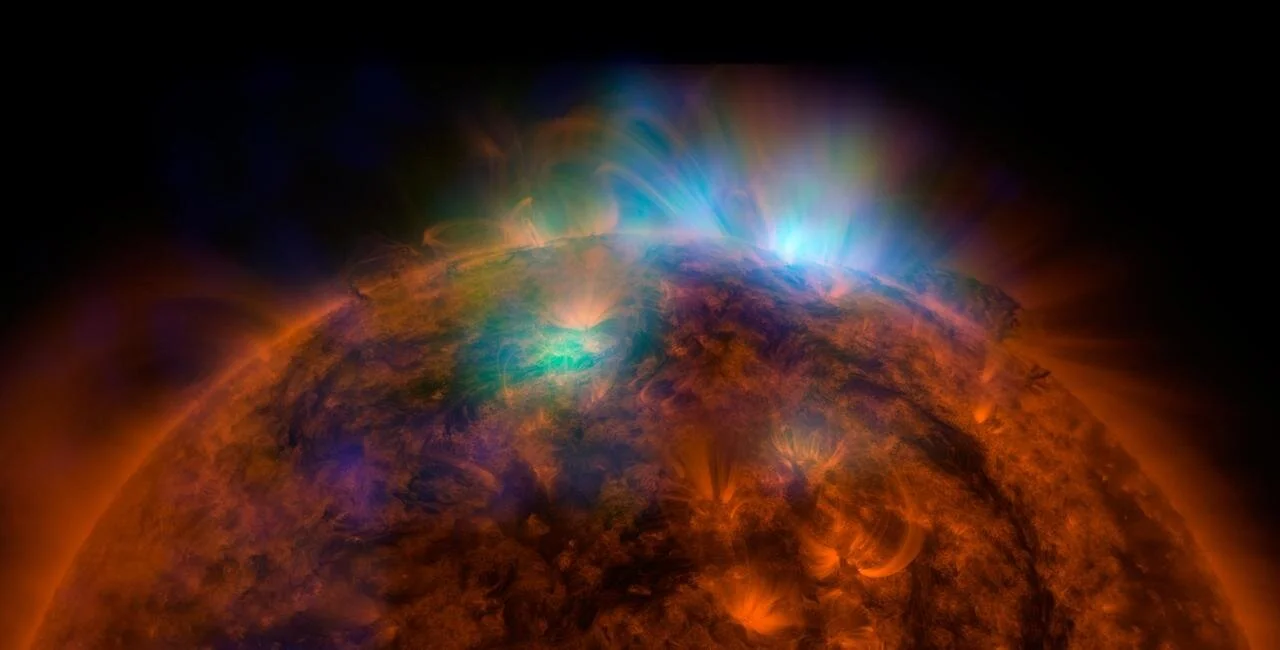
Ours is the closest star for trillions of miles, quite average in size but still large enough to swallow Earth a million times over. Ours is a life provider, time giver, warmth source, sky light, day deity—the subject of myths and poems and songs.
Our star is around 4.6 billion years old, about halfway through its life as astronomers predict. It is wildly generative, losing an average of four million tons of mass per second and still managing to remain about the same size.
A star is a balancing act—a massive, gaseous celestial body whose immense gravity compresses hydrogen to form helium through violent nuclear fusion reactions deep in its core, resulting in energy that radiates outward and prevents the star’s very gravity from collapsing it entirely. This energy is released as light and heat, and so the stars shine.
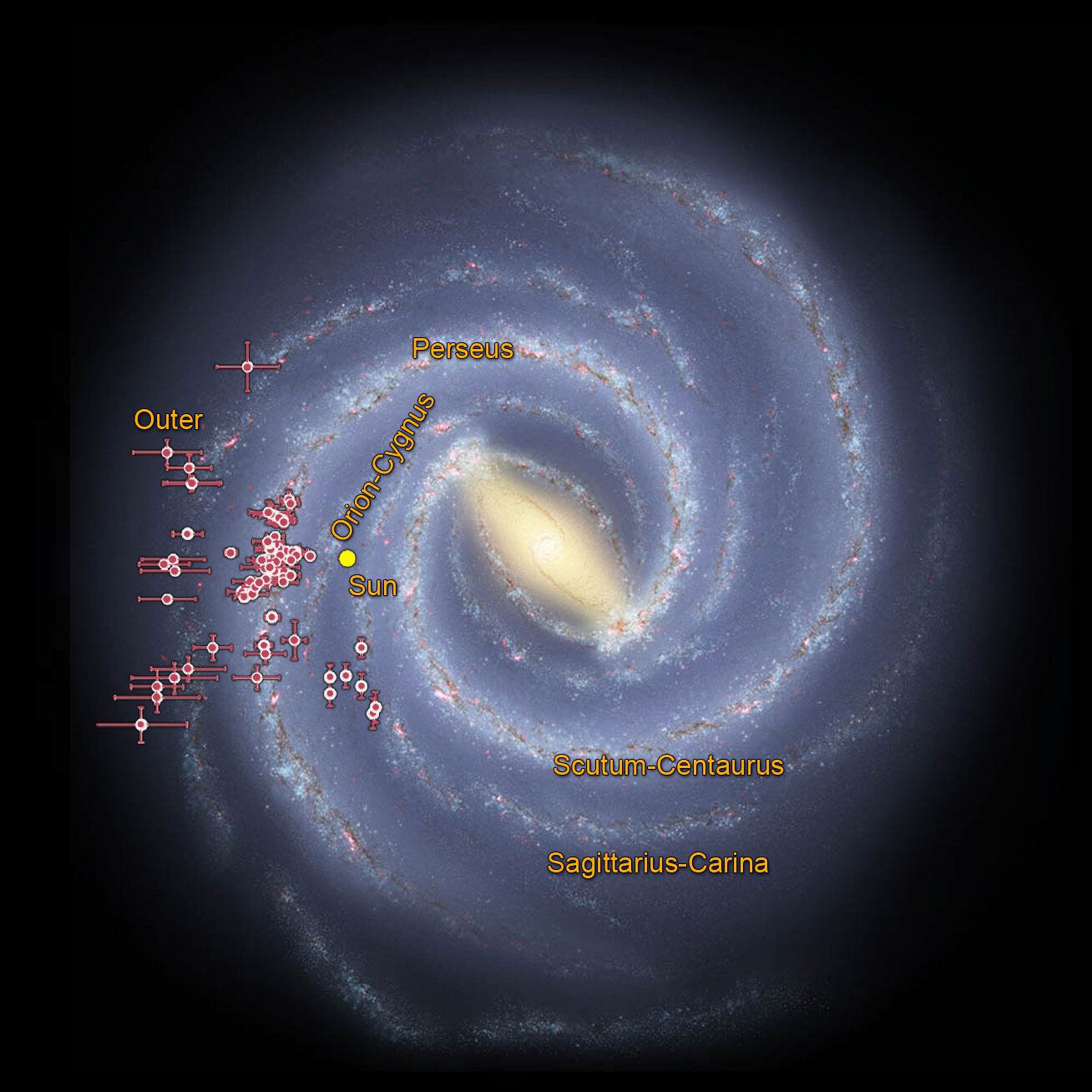
Image: NASA/JPL-Caltech/R. Hurt (SSC/Caltech)
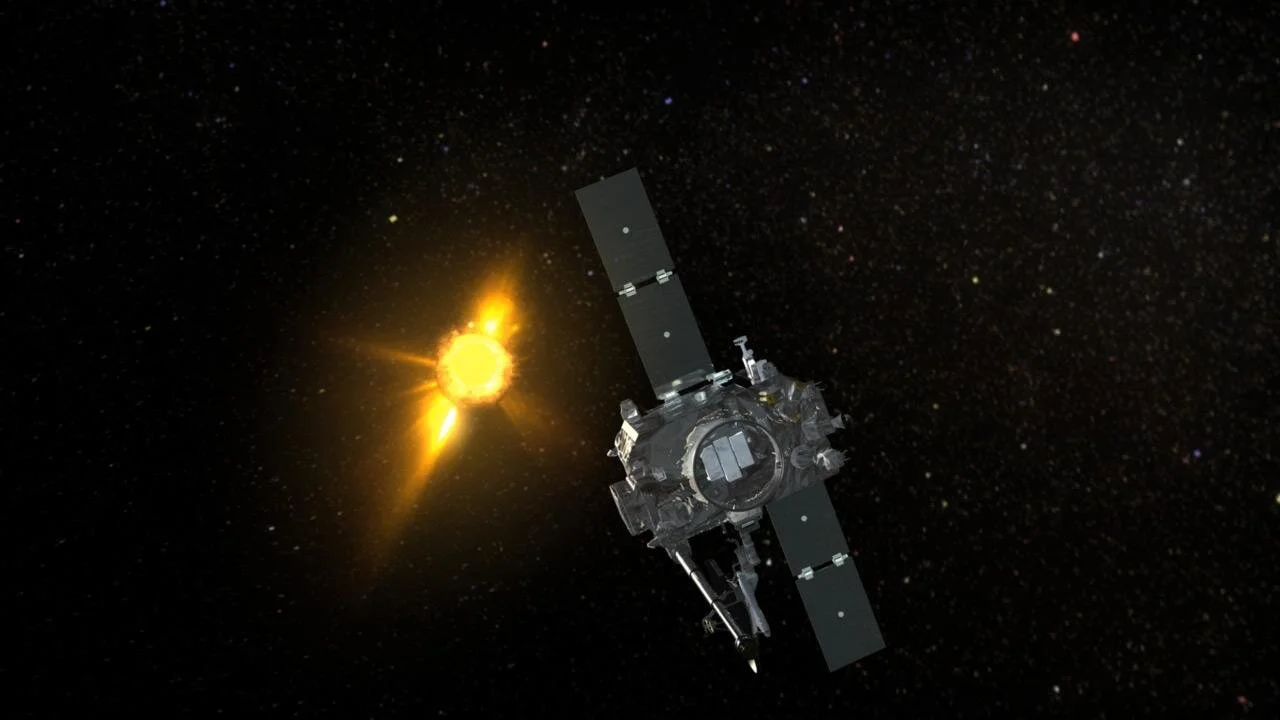

While the planets in our Solar System make their ways around the Sun, bound into orbit by its immense gravitational force, the Sun takes its own orbital path 25,000 light years away from the supermassive black hole at the center of the Milky Way. One Sun revolution takes about 250 million Earth years to complete.*
The Age of Sunlight
Light and energy from the Sun speed to Earth on a journey just eight minutes and twenty seconds long. But it takes much, much longer for that light to make its way from the Sun’s generative core to its ‘surface,’ the photosphere. In this TED Ed video, astronomer Sten Odenwald does an excellent job of demonstrating the physics that cause this phenomenon and lead to us living by energy that was generated approximately 170,000 (!!!) years ago.
So the life-force empowering everything we know and have is a time capsule, inextricably connecting our comparatively brief existence to a time far gone.
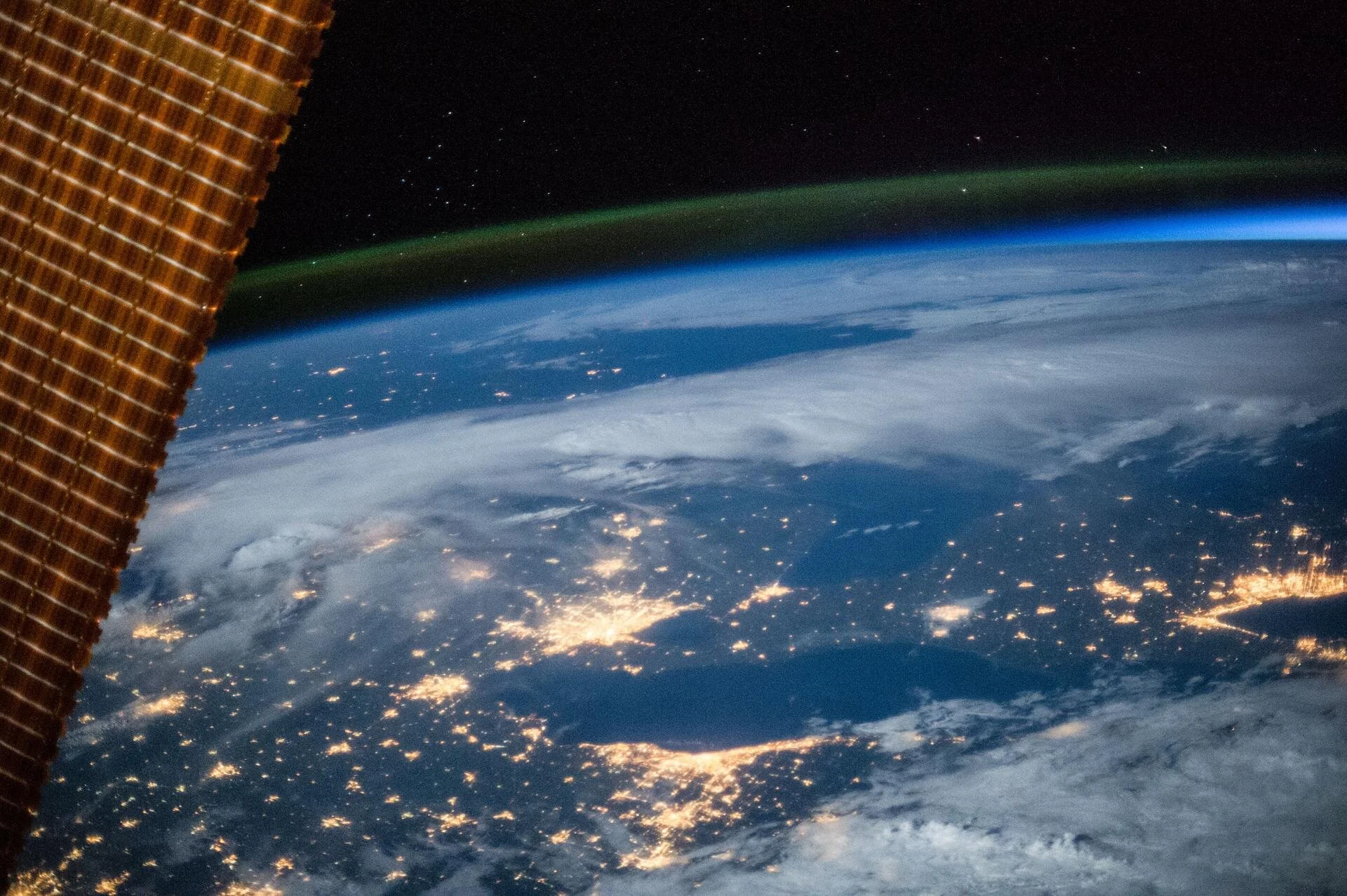
Image: NASA / Karen Nyberg 2013 | Earth observation taken during a night pass by an Expedition 36 crew member on board the International Space Station (ISS). Per Twitter message this is labeled as: Detroit, Cleveland, Toronto and a blue hint of sunrise.
Ancient light is just reaching our eyes—
on the other side of closed lids during a sunshine nap in the hammock,
in the mid-day rays feeding fields of crops,
in a faintly pink cloudy evening dusk,
as an orbital sunrise greeting astronauts aboard the International Space Station.
Looking Straight Into It
My personal relationship with the Sun is more of a reverential fear than a fondness, although I do love a sunshiny day. Maybe it has to do with the Sun’s blinding brightness, or its essentiality to existence—its power over the Earth and therefore over me.
I think the song ‘Sun’ by Sleeping at Last beautifully captures the frenetic, full energy of the star that nourishes and powers our existence—this line especially:
‘I guess space and time
can take violent things, angry things,
and make them kind.’
If you have any questions after reading this piece but don’t like reading long science articles, please leave a comment or reach out via email. I’d love to help you find the answer and will try to include it in a future piece.